
Resin Bound vs Resin Bonded in Kettering: Which One Suits Your Drive?
Resin bound vs resin bonded explained: how they differ, what each costs and which suits your drive. Plus advice from our Resin Bonded Driveways specialists.
The names are one letter apart, which is why plenty of Kettering homeowners mix them up. At Eco Resin Driveways, the question we hear most is resin bound vs resin bonded: which is better, and why do the quotes differ so much? The two surfaces are built differently, behave differently in the rain and cost very different amounts. Picking the wrong one can mean puddles, loose stones or a surface that wears out early. Here is how they compare, in plain terms.
What actually separates the two surfaces?
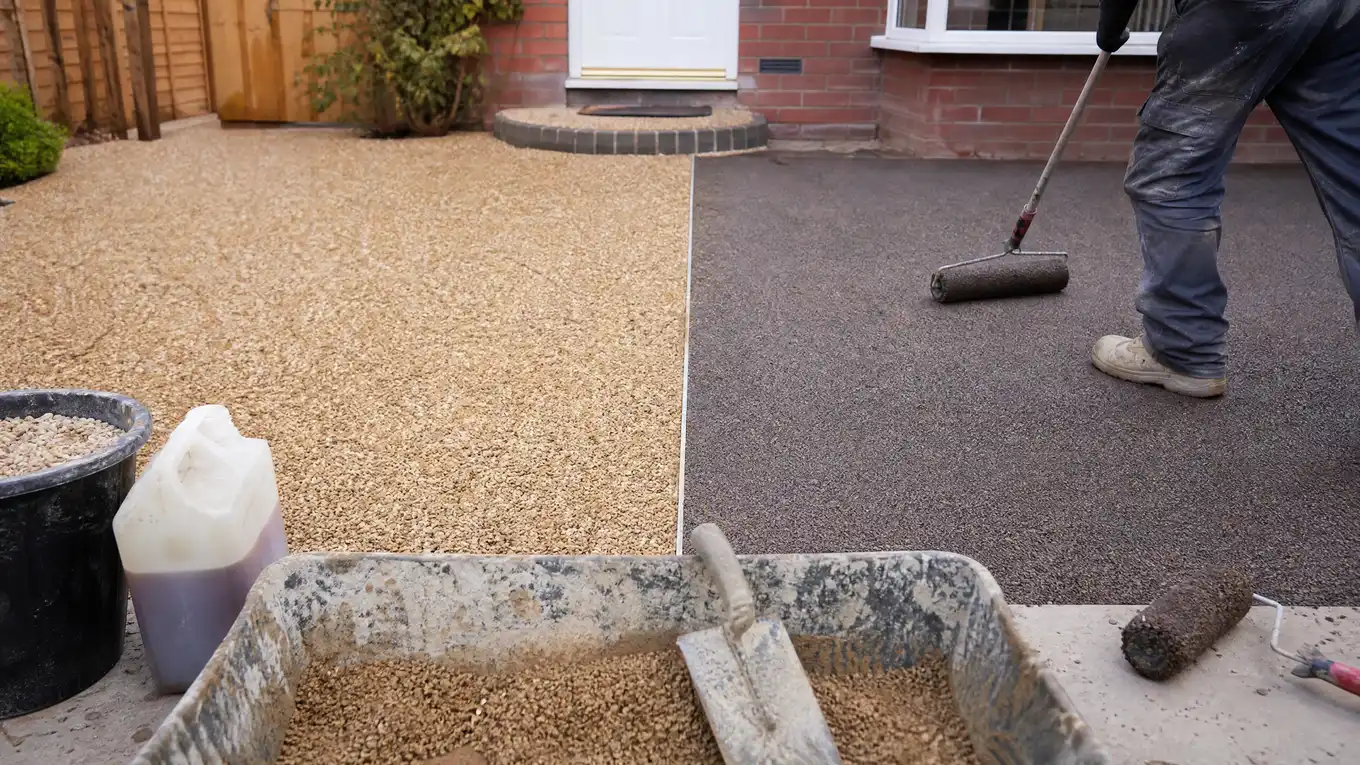
Resin bound mixes stone and resin together and trowels the mix onto the base as a smooth, porous layer. Resin bonded spreads a coat of resin first, then scatters loose stone over it. The result is a rougher, textured, non-porous finish. The order of the work is what changes everything.
Because bound stone is fully coated and packed together, water drains through it. Bonded stone sits on top of a sealed layer, so rain runs off rather than through. MyBuilder’s 2026 cost guide says resin bonded is textured and non-porous, so extra drainage may be needed, while resin bound is porous and SuDS compliant.
You can see the difference up close. A bound drive is smooth underfoot with no loose stone. A bonded drive feels gritty, and stray stones can work loose in the first weeks.
How do the costs compare?
Resin bonded is the cheaper surface, but the headline figures don’t tell the whole story. BestBuilders (updated 22 August 2026) puts resin bonded at £30–£50 per m². MyBuilder’s 2026 guide gives national ranges of £40–£70 per m² for resin bound and £25–£45 per m² for resin bonded on a standard finish.
Our local price ranges for a full resin bound installation are higher because they include the whole job. Rutland Driveways (October 2026) quotes £150–£220 per m² in Kettering, all in: dig-out, base, edging, surface and clear-up. Most drives here are 30–50 m², which Rutland Driveways works out at roughly £4,500–£11,000.
Quotes aren’t directly comparable. A bonded price often covers only the surface, while a bound price may include a new base. MyBuilder (2026) also notes that installers’ prices for the same job can vary by 20–30% in the same area. Always ask what is under the resin before comparing totals.
Which suits a tired tarmac, block or gravel drive?
It depends on the condition of what’s underneath. Bonded is a thin coating, so it copies whatever is below it. Cracks, dips and sunken blocks will show through, and a sound, level surface is the minimum for it to look right.
Resin bound also needs a stable base, but it’s usually laid on a purpose-built permeable sub-base. If your tarmac has cracked or your block paving has sunk, patching and covering rarely lasts. BestBuilders (updated 22 August 2026) says a failing base that must be dug out and replaced adds £50–£80 per m². That is why we survey the base honestly before recommending an overlay or a full dig-out.
Ground matters locally too. Rutland Driveways (October 2026) notes that ground around Kettering ranges from ironstone to clay, and new-build plots, such as those at Hanwood Park, are often compacted subsoil under thin topsoil. Clay holds water, so drainage matters on those plots, and our resin bonded driveways page covers where bonded works well and where it needs help.
Does the choice affect planning permission?
Yes, it can. The Planning Portal (Paving your front garden, 2026) says no planning permission is needed for a new or replacement driveway of any size that uses permeable surfacing or drains to a lawn or border. It also says permission is needed to lay more than 5 m² of impermeable surface in a front garden that drains to the road.
Resin bound is porous, so it fits the permeable route. Bonded can too, but only if the water is directed to a lawn or border or otherwise managed. If you’re in one of Kettering’s 26 conservation areas, including Barton Seagrave, Burton Latimer, Geddington and Rothwell (Rutland Driveways, October 2026), check with the council before you start. A new dropped kerb also needs North Northamptonshire Council’s approval.
Key takeaways
- Resin bound is stone mixed into resin and trowelled smooth. Resin bonded is stone scattered over a resin coat.
- Bound is porous. Bonded is non-porous and may need extra drainage (MyBuilder, 2026).
- Bonded is cheaper per m², but the quotes often cover different amounts of work.
- Bonded needs a sound, level surface to start with. A failing base is the main reason resin fails.
- Check drainage and planning rules before you choose, especially in a conservation area.
Not sure which one your drive needs?
Get a Free Quote and we’ll survey your drive, lay colour samples against your own frontage and tell you plainly which surface suits it. Or call us on 01536 580137.


Frequently Asked Questions
Neither is better outright. Resin bound is smoother, porous and lasts longer: BestBuilders (updated 22 August 2026) says 15–25 years on a sound base. Resin bonded costs less and suits a firm, level surface where a textured finish and some drainage planning are acceptable.
Sometimes. If the tarmac is sound, level and free of cracks and potholes, bonded can work. If it has failed, the problems will show through and the surface will let you down. We'll tell you honestly at the survey whether an overlay will work or the base must go.
Both are fairly low-effort, but they differ. Bound needs occasional sweeping and a rinse, with no loose stone. Bonded can shed stones early on and may need brushing or topping up. The bigger risk for either is a poor base, so ask about the build before you ask about the finish.
Get a Fixed Price for Your Resin Driveway
Tell us roughly how big the drive is and what is there now. We visit, bring colour samples, check the base and give you a written price.